


Fall-front Sindh cabinet, Probably Sindh (present-day Pakistan); ca. 1580–1630
Further images
-
(View a larger image of thumbnail 1
)
-
(View a larger image of thumbnail 2
)
-
(View a larger image of thumbnail 3
)
-
(View a larger image of thumbnail 4
)
-
(View a larger image of thumbnail 5
)
-
(View a larger image of thumbnail 6
)
-
(View a larger image of thumbnail 7
)
-
(View a larger image of thumbnail 8
)
-
(View a larger image of thumbnail 9
)
-
(View a larger image of thumbnail 10
)
-
(View a larger image of thumbnail 11
)
Provenance
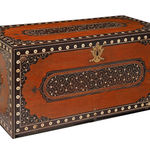
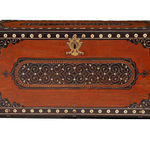
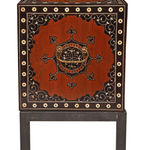
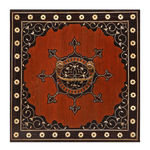
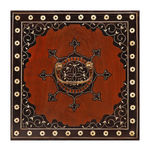
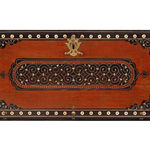
Sylvie Lhermite-King, UK; PAB, ParisThis imposing fall-front cabinet was likely made in Sindh, in present-day Pakistan, towards the late sixteenth or early seventeenth centuries.[1] Of teakwood (Tectona grandis) carcass, it is thickly veneered in ebony (Diospyros ebenum) and lavishly decorated with ivory and micro-mosaic (Sadeli) inlays. Its gilt copper fittings include two side handles, inner drawers human mask shaped pulls, and front lock plate featuring a double-headed eagle or gandabherunda – a Hindu mythological bird possessing magical strength, that wards off evil and protects the cabinet contents.
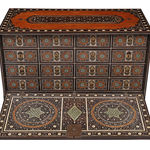
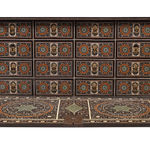
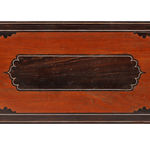
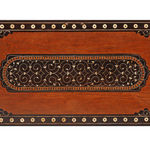
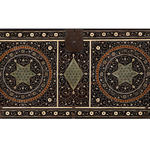
The box outer decoration follows a carpet-like pattern of polylobate central cartouches filled with foliage motifs, and a border of eight-petaled rosettes with central Sadeli motif detail. The fall front inner surface is characterised by a more complex border alternating rosettes and foliage scrolls, and by a central ground segmented into three sections: two circular medallions centred by six-pointed stars of dense Sadeli decoration flanking a lozenge of identical decorative motifs over a ground of plant scrolls. The cabinet features twelve drawers, simulating sixteen fronts, all of identical decoration and arranged over four tiers.
This large cabinet would have been commissioned by a wealthy aristocratic household, as a reminiscent of the opulent ebony, marquetry and pietre dure (hardstone) cabinets produced at the wealthiest European courts. A hybrid piece of luxury furniture, combining a European prototype with complex local decorative techniques and precious exotic raw materials, this cabinet epitomises to perfection the refined taste of the Portuguese clientele who acquired it.
Based on recurrent furniture typologies, favoured materials, and Iranian-derived decorative techniques, such as the time-consuming and delicate Sadeli decoration, this elegant and more restrained production, in contrast to furniture made in Gujarat for exporting, has recently been attributed to Thatta, in Sindh (present-day Pakistan).[2]
Cabinets as large as the one herewith described are very rare, those destined to be placed on a table, with each drawer fitted with its own lock, being more prevalent. A privately owned fall-front cabinet of similar size (34.0 x 68.0 x 36.5 cm), and identical Sindh origin, has been published in a monograph by the Art-Historian Pedro Dias.[3] Not as sophisticated in its denser horror vacui decorative composition, it is equally made in teakwood, but veneered in East Indian rosewood, rather than in the precious ebony present in our cabinet.
Hugo Miguel Crespo
[1] For a fall-front cabinet of this production, in the collection of the Victoria and Albert Museum, London (inv. 317-1866), see Amin Jaffer, Luxury Goods from India. The Art of the Cabinet-Maker , London, V&A Publications, 2002, p. 19.
[2] Hugo Miguel Crespo, India in Portugal. A Time of Artistic Confluence (cat.), Porto, Bluebook, 2021, pp. 76-88.
[3] Pedro Dias, Mobiliário Indo-Português, Moreira de Cónegos, Imaginalis, 2013, pp. 356-357.
Join our mailing list
* denotes required fields
We will process the personal data you have supplied to communicate with you in accordance with our Privacy Policy. You can unsubscribe or change your preferences at any time by clicking the link in our emails.